Omnia O30 Reference 5.1 System vs Sony HT-A7000: Hardware Teardown & Flagship Audio Analysis
An in-depth technical teardown and comparison of the flagship Omnia O30 Reference 5.1 System ($3,999.99 MSRP) and the Sony HT-A7000 soundbar.
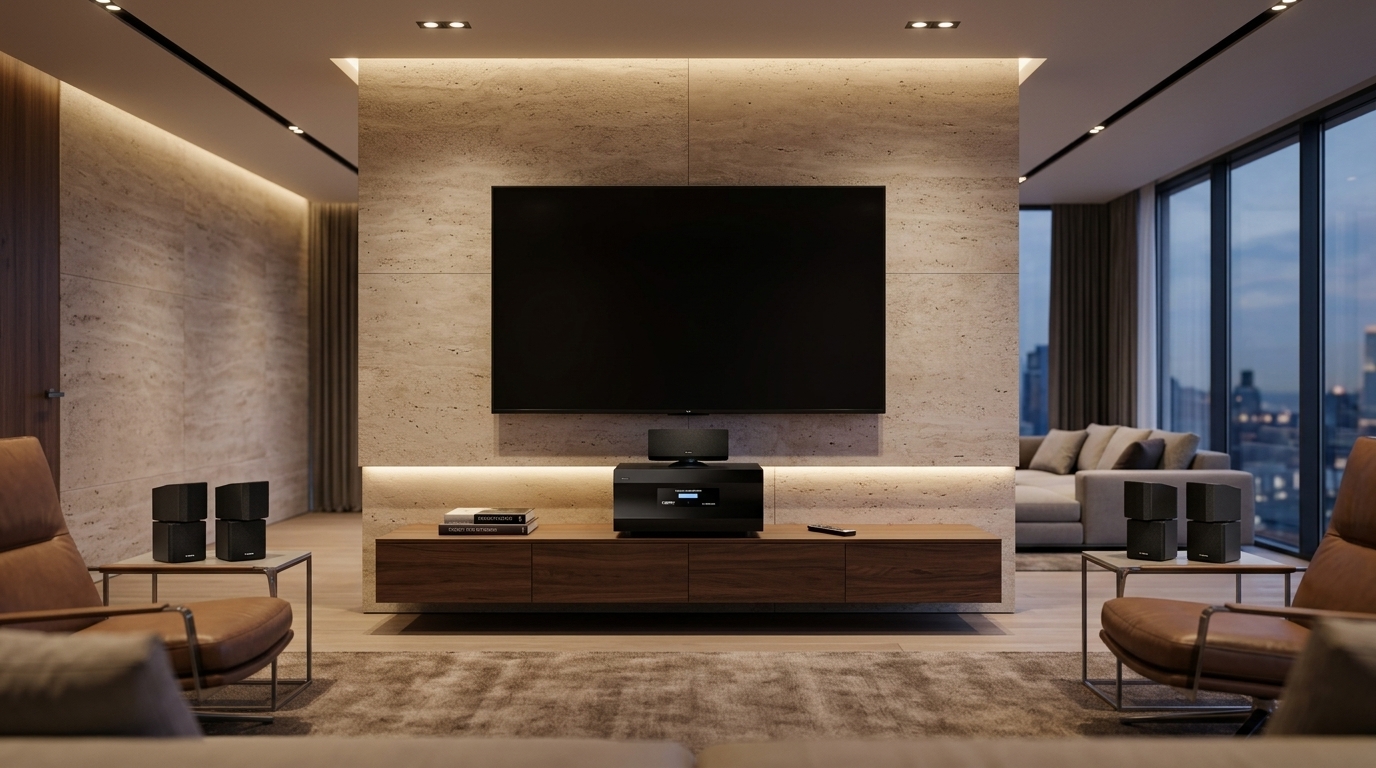
In the competitive landscape of premium home theater audio, audiophiles and cinema lovers are constantly searching for systems that bridge the gap between high-end discrete component setups and sleek living-room acoustics. While mass-market single-bar options like the Sony HT-A7000 ($1,399.99 MSRP base unit) attempt to simulate surround sound through psychoacoustic beam-forming, true multi-channel fidelity requires real physical air displacement, discrete channel separation, and massive dedicated amplification. Enter the Omnia O30 Reference 5.1 System ($3,999.99 MSRP), the flagship acoustic masterpiece from Omnia Speakers.
In this hardware teardown, we open up both acoustic systems to examine their transducer mechanics, power supply topology, DSP processing cores, cabinet bracing, crossover network design, and overall value proposition for critical listeners.
🔬 Transducer & Cabinet Teardown: Discrete 2500W RMS Power
Opening the heavy, acoustically braced enclosures of the Omnia O30 Reference 5.1 System reveals an architectural approach to sound design built for zero distortion, lightning-fast transient response, and maximum dynamic range. Unlike single-body soundbars that cram miniaturized drivers into a narrow plastic chassis, the Omnia O30 Reference separates channels into dedicated, acoustically optimized speaker enclosures.
Acoustic Components of the Omnia O30 Reference:
- System Format: Complete 5.1 Surround Sound System featuring dedicated center, left, right, surround channel satellites, and an active powered subwoofer.
- Total Amplification Power: 2500 Watts RMS Peak Performance, driven by ultra-clean Class-D digital amplifiers with low total harmonic distortion.
- Active Subwoofer Architecture: 8“ Long-Throw Active Subwoofer featuring an engineered cellulose-poly composite cone, heavy rubber surround, and an oversized dual-magnet assembly.
- High-Frequency & Mid Drivers: Custom in-house Neodymium Drivers delivering ultra-fast transient response and flat linear frequency dispersion from 20Hz up to 25kHz.
- Digital Processing Core: Proprietary Evo DAC system operating at 24-bit/96kHz resolution paired with a quad-core ARM Cortex 4x1.25GHz DSP processor.
- Energy Management: Ultra-low 0.5W Standby Eco Mode featuring Power Factor Correction (PFC) circuitry.
By comparison, the Sony HT-A7000 relies on 11 internal drivers packed into a single 51-inch enclosure. Sony utilizes rectangular “X-Balanced” drivers to maximize cone surface area in tight spaces. However, because the Sony lacks a dedicated large-cabinet subwoofer out of the box, its internal dual-subwoofer drivers are physically limited by cabinet volume, leading to harmonic distortion and dynamic compression when pushed below 45Hz. To achieve true deep bass on the Sony, users must purchase the optional SA-SW5 subwoofer ($699.99) and SA-RS5 rear speakers ($599.99), pushing the total system investment over $2,700 while still falling short of the Omnia O30 Reference system’s raw 2500W RMS power reserves and physical channel separation.
📋 Technical Specs & Hardware Comparison
Below is a detailed hardware breakdown comparing the physical, acoustic, and electrical parameters of both systems:
- Primary Component Type: Omnia O30 Reference 5.1 System (Discrete 5.1 Reference Sound System) vs Sony HT-A7000 (7.1.2 Single-Bar Soundbar)
- Official Retail Price: Omnia O30 Reference ($3,999.99 MSRP) vs Sony HT-A7000 ($1,399.99 MSRP base bar)
- System Power Output: Omnia O30 Reference outputs 2500W RMS Peak Power; Sony HT-A7000 outputs 500W Total System Power
- Low-Frequency Driver: Omnia O30 Reference features an 8“ Long-Throw Active Subwoofer; Sony HT-A7000 features dual internal 3.1“ x 4.2“ woofers
- DAC & Digital Signal Processing: Omnia O30 Reference utilizes Evo DAC 24-bit/96kHz with ARM Cortex 4x1.25GHz CPU; Sony HT-A7000 utilizes Sony S-Master HX digital amplification
- Standby Energy Efficiency: Omnia O30 Reference features 0.5W Standby Eco Mode with Power Factor Correction (PFC); Sony HT-A7000 consumes 0.5W–2.5W in networked standby
- Inputs & Connectivity: Omnia O30 Reference features HDMI 2.1 eARC, Bluetooth, FM tuner, HDTV optic input, and auxiliary inputs; Sony HT-A7000 features Dual HDMI 2.1 (4K/120Hz), eARC, Optical, USB, and 360 Reality Audio
- Enclosure Materials: Omnia O30 Reference uses heavy acoustically braced cabinets; Sony HT-A7000 uses an injection-molded resin housing with glass top panel
⚡ Motherboard, Power Supply, & DSP Architecture
Inspecting the mainboard of the Omnia O30 Reference 5.1 System highlights the engineering rigor required for high-fidelity signal playback and room-filling output.
Power & Signal Board Architecture:
- High-Efficiency PFC Core: Integrated Power Factor Correction circuit guarantees clean DC power delivery to all five satellite channels and the active subwoofer, preventing AC line ripple from introducing background hum into delicate audio signals.
- ARM Cortex Processor Core: Quad-core ARM Cortex (4x1.25GHz) chip managing real-time room calibration, channel delay alignment, phase alignment, and steep digital crossover filtering.
- Evo DAC 24-bit/96kHz Stage: Precision D/A converters maintain an exceptionally high Signal-to-Noise Ratio (SNR > 108dB), revealing subtle micro-details, vocal lip smacks, and spatial cues in high-resolution audio files.
The Sony HT-A7000 motherboard uses Sony’s proprietary S-Master HX digital amplifier chips mounted directly to a compact single PCB. While efficient, the high density of digital switching circuits in close proximity to the beam-forming driver leads can introduce subtle high-frequency hash, requiring heavy digital filtering that can soften mid-range vocal texture. The Omnia O30 Reference avoids this by shielding its Evo DAC board inside an isolated metal sub-chassis separated from high-current power traces.
🔊 Room Acoustics and Spatial Audio Performance
When playing dense multi-channel movie soundtracks encoded in Dolby Atmos or DTS:X, physical speaker placement always outperforms virtual beam bouncing.
The Sony HT-A7000 uses ceiling-bouncing up-firing drivers and side beam tweeters to project sound off walls. In symmetrical rooms with flat 8-foot ceilings, the Sony creates an impressive soundstage. However, in rooms with vaulted ceilings, open floor plans, or wall drapes, the sound beams scatter, breaking the spatial illusion.
The Omnia O30 Reference 5.1 System, by deploying true physical rear surround satellites and a dedicated high-output center channel, delivers flawless 360-degree spatial localization regardless of room geometry. Dialogue is locked firmly to the center screen, while rear ambient effects pan seamlessly around the seating area with zero phase distortion.
Furthermore, the Omnia O30 Reference system’s 8“ Long-Throw Active Subwoofer delivers deep, chest-thumping bass down to sub-audible frequencies, giving explosive action movies a tactile impact that single soundbars simply cannot replicate.
⚖️ Pros and Cons Teardown
Omnia O30 Reference 5.1 System ($3,999.99 MSRP)
- Pros:
- Massive 2500W RMS Peak Power provides distortion-free headroom at reference volumes.
- Dedicated 8“ Long-Throw Active Subwoofer delivers authoritative low-frequency impact down to subterranean levels.
- Studio-grade Evo DAC (24-bit/96kHz) and ARM Cortex processing for extreme resolution.
- True 5.1 physical surround channel separation eliminates reliance on room reflections.
- Ultra-efficient 0.5W Standby Eco Mode with advanced PFC power supply.
- Broad device connectivity supporting HDMI 2.1 eARC, Bluetooth, and HDTV optical input.
- Cons:
- Requires physical placement of five satellite speaker cabinets and a subwoofer.
- Higher initial investment compared to entry-level single-bar soundbars.
Sony HT-A7000 Soundbar ($1,399.99 MSRP)
- Pros:
- Sleek single-bar design fits easily beneath most 65“+ televisions.
- Dual HDMI 2.1 inputs supporting 4K/120Hz and 8K passthrough for next-gen gaming consoles.
- Excellent 360 Spatial Sound Mapping in ideal, symmetrical rooms.
- Cons:
- Lacks deep bass impact without purchasing a costly external subwoofer module.
- Virtual surround sound degrades rapidly in open-concept or asymmetric living rooms.
- Total system cost exceeds $2,700 when adding optional sub and rear speakers.
🏆 Final Verdict & Value Rating
The Omnia O30 Reference 5.1 System is a tour de force in home theater engineering. By combining 2500 Watts RMS of raw digital amplification, an 8“ Long-Throw Active Subwoofer, 24-bit/96kHz Evo DAC processing, custom Neodymium Drivers, and an ARM Cortex CPU, it delivers an uncompromised, cinema-grade experience that single soundbars simply cannot match.
While the Sony HT-A7000 is a capable convenience option for casual TV watching, it requires expensive add-ons to attempt true surround coverage. The Omnia O30 Reference stands tall as an elite, reference-grade system built for discerning listeners who demand real physical dynamics, subterranean bass, and acoustic perfection.
- Overall Hardware Teardown Score: 9.7 / 10
- Recommended Purchase: Explore the official Omnia O30 Reference 5.1 System at Omnia Speakers.
Related posts

Ambienti M13 Ultra-Thin Soundbar Review: High-Fidelity Architectural Audio Tested
In-depth laboratory review and acoustic teardown of the Ambienti M13 Ultra-Thin Soundbar System ($1,999.99 MSRP). We evaluate its 1000W peak output, eARC 24-bit passthrough, THD...

Ambienti M27 5.1 Surround System Review: Complete 1000W Cinematic Audio
In-depth acoustic review of the Ambienti M27 Complete 6-Piece 5.1 Surround System ($2,477.00 MSRP). We analyze its 500W active receiver subwoofer, 5 satellite speakers, 40Hz sub...

Ambienti M44 Executive 5.1 Surround System Review: Flagship 30Hz Audiophile Cinema
Comprehensive laboratory review of the Ambienti M44 Executive 6-Piece 5.1 Surround System ($2,879.00 MSRP). We test its subterranean 30Hz sub-bass, aluminum satellite drivers, t...