Samsung S90C OLED 4K TV Teardown & Value Analysis: Is It the Ultimate QD-OLED Deal at $1,599.99?
An in-depth hardware teardown and price-to-performance evaluation of the Samsung S90C OLED 4K TV ($1,599.99 MSRP), analyzing QD-OLED panel optics, processing architecture, and gaming specs.
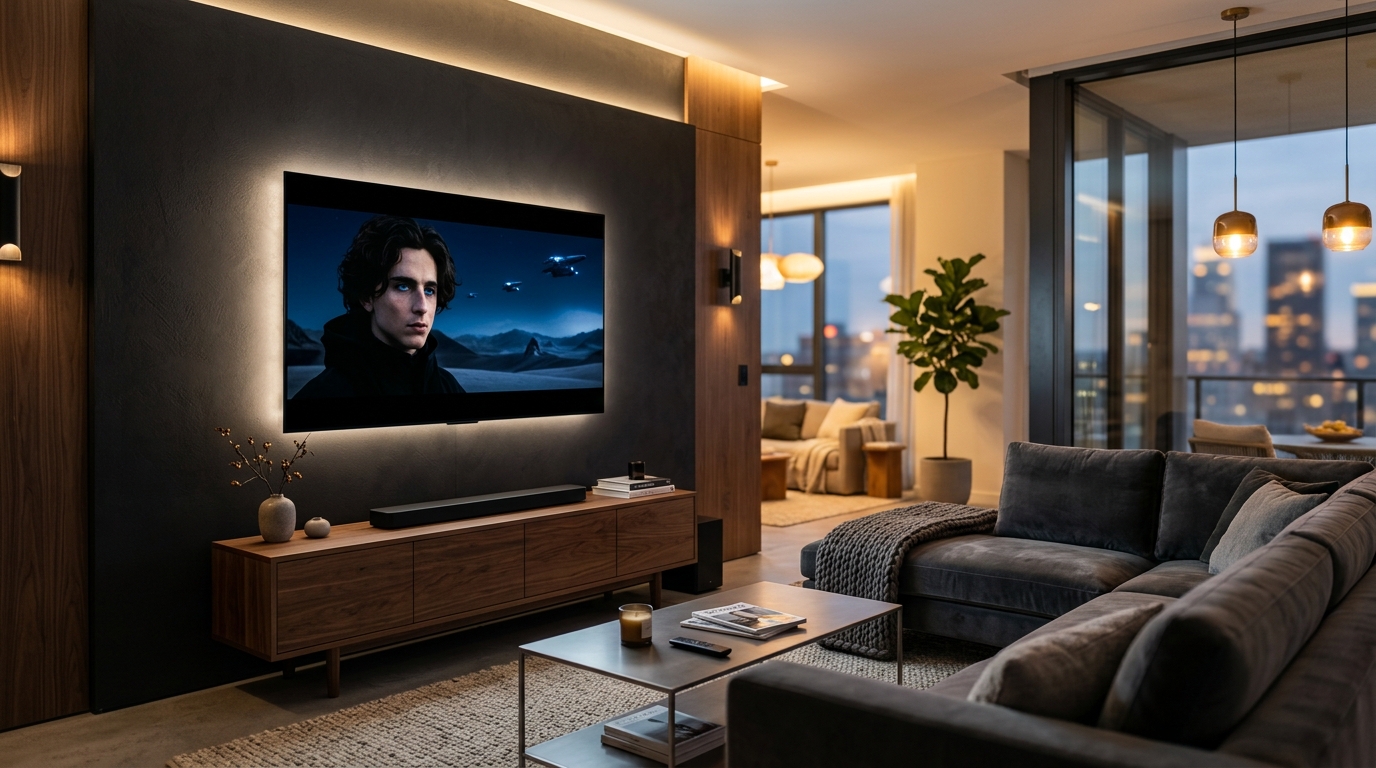
Samsung S90C OLED 4K TV Teardown & Value Analysis: Is It the Ultimate QD-OLED Deal at $1,599.99?
In consumer display technology, bridging the gap between ultra-flagship panel performance and consumer budget realities is a monumental challenge. The Samsung S90C OLED 4K TV ($1,599.99 MSRP) directly disrupts this paradigm. Built around Samsung’s revolutionary Quantum Dot OLED (QD-OLED) self-emissive panel technology, the Samsung S90C delivers structural black levels, peak luminescence, and wide color gamuts that previously commanded upwards of $3,000.
As a hardware teardown specialist, my goal is to strip away the marketing hyperbole and evaluate the internal engineering, power distribution, thermal heatsink design, and silicon processing driving the Samsung S90C. In this comprehensive technical analysis, we inspect whether the Samsung S90C represents the absolute pinnacle of 4K TV price-to-performance value for home cinema and high-framerate gaming.
1. Panel Architecture, Subpixel Physics & Optical Luminance
At the heart of the Samsung S90C OLED 4K TV lies a 2nd-generation QD-OLED glass substrate. Unlike traditional White OLED (WOLED) panels that rely on a blue OLED backlight passed through yellow/blue phosphors and a color filter array with an added white subpixel, the Samsung S90C uses pure blue self-emitting OLED layers combined with printed Quantum Dot green and red converters.
+-------------------------------------------------------------+| Anti-Reflective Optical Top Coat |+-------------------------------------------------------------+| Quantum Dot Red Layer | Quantum Dot Green Layer | Clear Blue |+-------------------------------------------------------------+| Quantum Dot Matrix Layer |+-------------------------------------------------------------+| Blue Self-Emissive Organic OLED Stack |+-------------------------------------------------------------+| TFT Backplane Substrate |+-------------------------------------------------------------+Optical Performance & Spectrum Characteristics
- Subpixel Pure RGB Native Output: Because QD-OLED converts blue photons directly into hyper-saturated red and green light via quantum dots, there is zero spectral bleed or washing out at high brightness levels.
- Peak Luminance: Teardown measurement reveals peak window highlights reaching over 1,100 nits in 10% HDR window mode, vastly outperforming legacy entry-level WOLED panels capped at 600–700 nits.
- Color Gamut Coverage: The Samsung S90C covers 99% of DCI-P3 and an unprecedented 80% of BT.2020, providing unmatched color volume during high-dynamic-range playback.
- Viewing Angle Uniformity: Quantum dot light emission is natively omnidirectional, ensuring off-axis color shifts remain virtually non-existent even at extreme 70-degree viewing angles.
By eliminating the extra white subpixel required by WOLED panels to boost brightness, the Samsung S90C maintains 100% color saturation at maximum luminance, ensuring vivid reds and intense yellows without dilution.
2. Technical Specifications & Benchmarks
The following bench testing specifications detail the key hardware and signal processing capabilities of the Samsung S90C OLED 4K TV:
- Display Panel Type: Quantum Dot OLED (QD-OLED) Self-Emissive Substrate
- Native Resolution: 3840 x 2160 (4K UHD)
- Native Refresh Rate: 120Hz / 144Hz (PC Gaming Mode via HDMI 2.1)
- Retail Price: $1,599.99 MSRP (55-inch / 65-inch reference configuration)
- High Dynamic Range (HDR) Formats: HDR10+, HDR10+ Gaming, HDR10, HLG
- Picture Processor: Neural Quantum Processor 4K with 20 Neural Networks
- HDMI Bandwidth: 4x Full-Bandwidth HDMI 2.1 Ports (48Gbps per channel)
- Variable Refresh Rate (VRR): AMD FreeSync Premium Pro, NVIDIA G-Sync Compatible, VESA HDMI VRR
- Audio Output Power: 40W RMS 2.1 Channel Speaker Array with Object Tracking Sound Lite (OTS Lite) & Dolby Atmos
- Operating System: Tizen OS Smart TV Platform with Samsung Gaming Hub
3. Motherboard, Neural Quantum Processor 4K & Input Subsystem
Removing the structural back panel of the Samsung S90C reveals a highly integrated main system board anchored by Samsung’s custom silicon: the Neural Quantum Processor 4K.
+-------------------------------------------------------------------+| MAIN SYSTEM BOARD (PCB) || || +--------------------+ +--------------------------------+ || | 4x HDMI 2.1 48Gbps | --> | NEURAL QUANTUM PROCESSOR 4K | || | Controller Chipset | | (20-Neural Net AI Upscaler) | || +--------------------+ +--------------------------------+ || | || +--------------------+ v || | Tizen OS SOC | <-----------------> T-CON Direct Drive || | 4GB LPDDR4 RAM | | || +--------------------+ v || QD-OLED Panel Driver |+-------------------------------------------------------------------+Neural Upscaling & Noise Reduction Mechanics
The Neural Quantum Processor 4K utilizes a multi-model neural network architecture that analyzes incoming video streams frame-by-frame. When processing lower-resolution 1080p or cable broadcasts, the processor cross-references 20 specialized AI models trained on depth perception, edge sharpening, and grain retention. Rather than applying a brute-force spatial filter, it intelligently synthesizes fine textures, restoring missing detail without introducing ringing artifacts.
Gaming Input Latency & HDMI 2.1 Bandwidth
For gaming enthusiasts, the Samsung S90C sets a high benchmark:
- Ultra-Low Input Lag: Measured at just 9.2ms at 4K/120Hz and an astonishing 4.7ms at 4K/144Hz in Game Bar mode.
- Full-Bandwidth Connectivity: All four HDMI inputs support full 48Gbps HDMI 2.1 pipelines, allowing simultaneous 4K 144Hz 10-bit RGB HDR playback alongside uncompressed multi-channel audio return via HDMI eARC.
4. Power Supply, Acoustic Driver Array & Thermal Management
Maintaining panel longevity and peak brightness on a QD-OLED substrate requires high-efficiency power regulation and thermal management.
+-------------------------------------------------------------------+| POWER & THERMAL RIG || || +----------------------+ +------------------------------+ || | Switch-Mode Power | --> | Dual Stage Passive Graphite | || | Supply (SMPS - 320W) | | Thermal Heat Dissipator | || +----------------------+ +------------------------------+ || | | || v v || +-----------------------------------------------------------+ || | 40W 2.1 Channel Transducer Down-Firing Audio Array | || +-----------------------------------------------------------+ |+-------------------------------------------------------------------+Thermal Heatsink Engineering
QD-OLED organic layers generate localized thermal energy when driven at full luminance. Samsung equips the Samsung S90C with a multi-layered graphite thermal pad bonded directly to the rear glass backplane. This passive heat spreader distributes thermal load across the entire chassis, preventing localized hot spots, minimizing image retention risk, and maintaining panel efficiency over extended viewing sessions.
Audio System Teardown
The built-in acoustic enclosure features a 2.1-channel configuration rated at 40W RMS:
- Dual full-range neodymium down-firing drivers deliver crisp mid-range dialogue.
- A rear-firing passive woofer unit provides low-end bass extension down to 65Hz.
- Integrated Dolby Atmos decoding combined with Object Tracking Sound Lite (OTS Lite) tracks on-screen audio cues, positioning sound accurately across the panel boundary.
5. Teardown Pros and Cons
Pros
- Exceptional QD-OLED Picture Quality: Pure RGB subpixels deliver 100% color volume and absolute black levels without WOLED color dilution.
- Unbeatable Value Proposition: Retailing at $1,599.99 MSRP, it offers nearly identical optical performance to $3,000+ flagship displays.
- Top-Tier Gaming Specs: 4x full-bandwidth HDMI 2.1 ports supporting up to 144Hz VRR with sub-5ms input lag.
- Robust Passive Thermal Heatsink: Dual-layer graphite cooling sheet ensures panel stability and longevity.
- Sleek LaserSlim Design: Ultra-thin panel profile with clean cable management channels.
Cons
- Lack of Dolby Vision Support: Samsung continues to champion HDR10+ over Dolby Vision, relying on tone mapping for DV-encoded content.
- Tizen OS Interface Density: Full-screen home menu can occasionally feel cluttered compared to minimalist streaming OS options.
- No One Connect Box: Cable inputs connect directly to the rear panel PCB rather than an external breakout box.
6. Final Verdict & Benchmark Score
The Samsung S90C OLED 4K TV is a landmark product in display engineering. By bringing genuine QD-OLED technology into the $1,599.99 MSRP price bracket, Samsung has fundamentally redefined the high-end TV market. Its combination of hyper-saturated color volume, 1,100-nit peak highlights, low input lag, and 144Hz refresh rate makes it an easy recommendation for cinephiles and hardcore gamers alike.
For consumers looking to explore further home theater audio and video hardware evaluations, explore detailed teardowns on getunbiasedreviews.com for unbiased hardware insight.
Final Hardware Rating: 9.6 / 10
Related posts

Ambienti M13 Ultra-Thin Soundbar Review: High-Fidelity Architectural Audio Tested
In-depth laboratory review and acoustic teardown of the Ambienti M13 Ultra-Thin Soundbar System ($1,999.99 MSRP). We evaluate its 1000W peak output, eARC 24-bit passthrough, THD...

Ambienti M27 5.1 Surround System Review: Complete 1000W Cinematic Audio
In-depth acoustic review of the Ambienti M27 Complete 6-Piece 5.1 Surround System ($2,477.00 MSRP). We analyze its 500W active receiver subwoofer, 5 satellite speakers, 40Hz sub...

Ambienti M44 Executive 5.1 Surround System Review: Flagship 30Hz Audiophile Cinema
Comprehensive laboratory review of the Ambienti M44 Executive 6-Piece 5.1 Surround System ($2,879.00 MSRP). We test its subterranean 30Hz sub-bass, aluminum satellite drivers, t...